
Table of Contents
- Why Verifying Vehicle Mileage History Matters
- MOT History Check: What the Records Show
- Signs of Odometer Tampering to Watch For
- Understanding Mileage Discrepancy Meaning and What It Reveals
- Step-by-Step: How to Verify Vehicle Mileage History
- Used Car Buying Checklist: Mileage Verification as Part of Your Due Diligence
- Common Mistakes When Checking Mileage History
- Conclusion
Last Updated: September 4, 2026
Why Verifying Vehicle Mileage History Matters
Mileage is one of the most important factors when assessing a used car's condition and value. A vehicle with genuine, low mileage typically commands a higher price and suggests fewer hours of engine wear. Conversely, a car with higher mileage may have accumulated more mechanical stress, even if it's been well maintained. The challenge is that mileage figures can be altered, misrepresented, or simply lost in a vehicle's history records.
Verifying vehicle mileage history can help buyers identify records that deserve further investigation and assess whether the asking price makes sense in the context of the vehicle's recorded history. It also helps sellers understand what records exist about their own vehicles before putting them on the market. For trade professionals, mileage verification is a routine part of assessing part-exchange vehicles and stock quality.
Odometer tampering, though less common than it once was, still occurs. More often, mileage discrepancies arise from poor record-keeping, missing MOT entries, or gaps in a vehicle's documented history. Without checking, a buyer might unknowingly purchase a car that has travelled significantly more miles than the seller claims.
The good news is that verifying a vehicle's mileage history is straightforward when you know where to look. Mileage recorded at MOT tests is available through the GOV.UK MOT history service and provides a useful trail of recorded readings, while a comprehensive vehicle history check can bring this information together with other vehicle-history data in one place.
MOT History Check: What the Records Show
The GOV.UK MOT history service shows previous MOT test results for a vehicle, including the mileage recorded at each test (gov.uk). These readings can create a useful chronological mileage trail and help identify figures that need further investigation. An MOT mileage entry is a recorded figure, however, and should not automatically be treated as proof that the odometer reading was entered correctly.
An MOT history check shows whether a vehicle passed or failed previous tests and the mileage recorded at each test date. This is useful for spotting figures that do not fit the surrounding history. For example, if an earlier MOT shows 45,000 miles but the current odometer shows 40,000 miles, that reduction should be investigated. An unusually large increase between records can also justify further checking, but annual mileage can vary enormously and an unusual figure may also be the result of a recording error.
MOT history is available through the official GOV.UK service or through a vehicle history check service (gov.uk). The advantage of using a dedicated vehicle history check is that recorded MOT mileage can be presented clearly alongside other vehicle information such as outstanding finance status, insurance write-off history, and tax information.
Older vehicles, or those that have recently been imported, may have incomplete MOT histories. Additionally, a vehicle only has an MOT record if it's been tested; cars under three years old (or those exempt from MOT) won't have this data available.
Signs of Odometer Tampering to Watch For
Odometer tampering is deliberately altering a vehicle's mileage reading to misrepresent its true age and condition (peer-reviewed research). Although modern digital odometers are harder to tamper with than older mechanical ones, it still happens. Recognising the warning signs helps protect against purchasing a clocked vehicle.
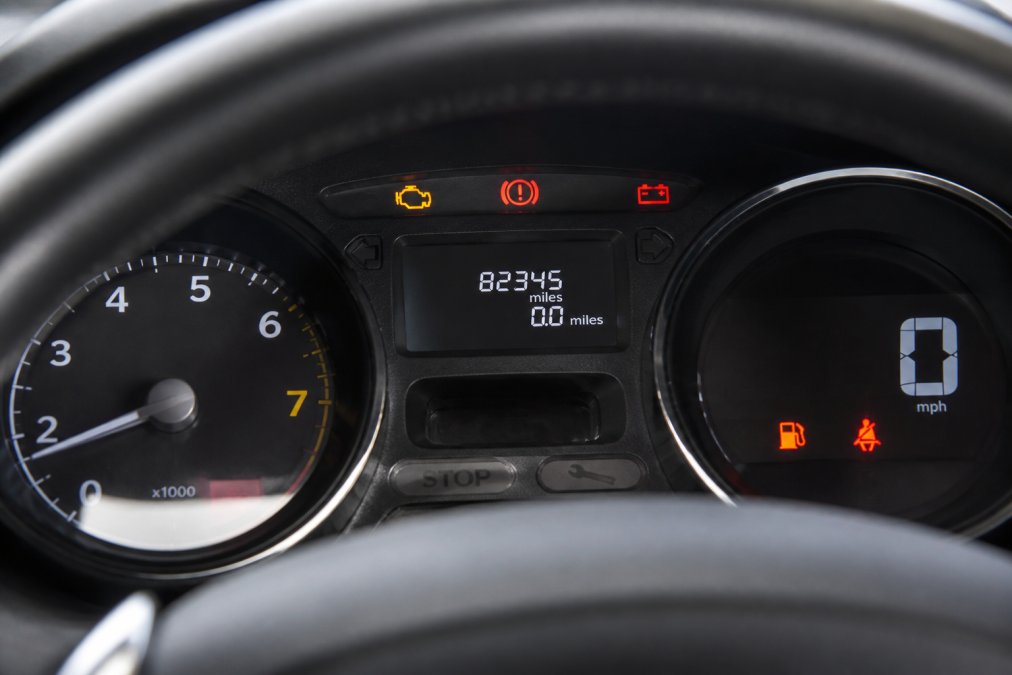 Inconsistent mileage records are one of the clearest reasons to investigate a vehicle's history, but low annual mileage is not suspicious by itself. Some used cars legitimately cover only a few hundred or a few thousand miles each year. The main concern is when recorded figures do not follow a logical sequence, such as a later MOT showing a lower mileage than an earlier test, or when MOT, service and current odometer readings conflict significantly. Even then, a discrepancy does not automatically prove clocking because recording mistakes can occur.
Vehicle condition can provide useful context, but appearance alone cannot verify mileage. Heavy wear on a vehicle showing unusually low mileage may justify further checks, but a higher-mileage car can still look exceptionally good if it has been carefully maintained, restored, resprayed, reupholstered or had worn components replaced. Conversely, a genuinely low-mileage vehicle may deteriorate through age, neglect or the type of use it has had. Physical condition should therefore be considered alongside documented mileage records rather than treated as proof that a mileage figure is correct or incorrect.
Service history can provide useful supporting evidence. Where service records include mileage readings, compare them with MOT records and the current odometer. Gaps in service history can have innocent explanations, but conflicting mileage entries are worth investigating rather than assuming they prove tampering.
Signs that the instrument cluster has been removed or replaced can justify asking further questions, particularly if the mileage history is already inconsistent. However, dashboards and instrument clusters can also be removed for legitimate repairs or replacement, so physical signs alone are not proof of odometer tampering.
Round mileage figures are not evidence of clocking by themselves. An odometer can naturally show a round number, and a seller may also quote an approximate figure in an advert. What matters is whether the recorded chronology is consistent and whether any unusual entry can be explained by the wider vehicle history.
When any of these points raise questions, a thorough vehicle history check becomes even more useful. A comprehensive report can highlight recorded mileage discrepancies and help you compare them with the wider vehicle history before deciding whether further investigation is needed.
Understanding Mileage Discrepancy Meaning and What It Reveals
A mileage discrepancy occurs when a vehicle's recorded mileage at different points in its history doesn't align logically. For example, if a car's MOT record from two years ago shows 80,000 miles, but today's odometer reads 75,000 miles, that's a discrepancy.
Mileage discrepancies can have several causes. Deliberate odometer tampering is one possibility, but recording errors also occur. An MOT tester, garage or other record source may enter an incorrect figure that is either higher or lower than the vehicle's actual mileage. Digits can be transposed or the wrong figure entered entirely. This is why one unusual entry should be investigated in context rather than treated as proof that a vehicle has been clocked.
Sometimes, discrepancies are simply the result of missing records. If a vehicle wasn't tested for MOT in a particular year (perhaps it was off the road or exempt from testing), there will be a gap in the mileage trail. This isn't necessarily suspicious, but it does mean there's no independent verification for that period.
Understanding the context of a discrepancy is crucial. The size of the difference alone does not establish the cause. Small or large inconsistencies can result from recording mistakes, while a genuine reduction between chronological records may warrant closer investigation. Compare the dates, surrounding MOT entries, service records and current odometer before drawing conclusions.
When you review a vehicle history report, any recorded mileage discrepancies should be clearly flagged. This information helps buyers make informed decisions and assess whether the recorded mileage is consistent with the wider vehicle history.
Step-by-Step: How to Verify Vehicle Mileage History
Verifying a vehicle's mileage history involves checking multiple sources and cross-referencing the data. The process is methodical but straightforward.
Gather the Vehicle Registration Number
The registration number (also called the VRM or registration plate) is essential for all vehicle checks. This unique identifier links all the vehicle's records together.
You'll find the registration number on the vehicle's number plate at the front and rear. It's also printed on the vehicle's registration document (V5C), insurance certificate, and MOT reminder letters. When checking a vehicle you're considering buying, always verify the registration number matches across all documents. A mismatched registration is a major warning sign.
Once you have the correct registration number, you're ready to begin checking records.
Check MOT Records Online
Use the GOV.UK MOT history service and enter the vehicle's registration number to view previous MOT results and the mileage recorded at each test. If you also want to see where an MOT test was carried out in England, Scotland or Wales, you will need the 11-digit number from the vehicle's V5C log book.
Record the mileage figures and test dates in a spreadsheet or notebook. Look for any obvious inconsistencies: does the mileage increase logically from one test to the next? Are there any gaps where no MOT was recorded?
For a vehicle that's been regularly tested, you should see a clear progression. For example:
- Year 1: 45,000 miles
- Year 2: 52,000 miles
- Year 3: 59,000 miles
- Year 4: 67,000 miles
This is simply one example of a consistent mileage pattern. Some vehicles legitimately cover far less than this each year, while others cover much more. The important point is whether the chronology is plausible and whether any conflicting or unusual entries can be explained.
Review Vehicle History Reports
A comprehensive vehicle history check can bring MOT records, tax information, outstanding finance checks, insurance write-off status and other recorded data together in one report. This provides a useful overview of the information returned by the data sources checked, rather than a guarantee that every event in a vehicle's history has been recorded.
Services like HPI Check Scotland offer both Basic and Full vehicle history reports. A Full report includes detailed mileage history from MOT records, making it easier to compare recorded readings. Reports are normally generated immediately after purchase. Customers can use guest checkout without creating an account, view the report online and receive an email link back to it for later access. Creating a free account is optional.
When reviewing a report, pay particular attention to any mileage warnings or discrepancy flags. A reputable vehicle history check service will highlight any unusual patterns or missing records. Cross-reference the mileage figures in the report with the vehicle's current odometer reading.
Inspect the Vehicle in Person
Once you've reviewed the records, arrange to inspect the vehicle in person. Physical inspection can reveal clues that records alone cannot.
Compare the vehicle's condition with its documented history, but do not treat appearance as a mileage test. Heavy wear on a low-mileage car may justify questions, while a higher-mileage vehicle can look excellent after careful maintenance, restoration, a respray, reupholstery or replacement of worn components. Equally, age or neglect can make a genuinely low-mileage car look much older than its odometer suggests.
Examine the service history documentation if available. Compare the mileage recorded at each service with the MOT records and the vehicle's current odometer reading. Gaps or inconsistencies in service records can indicate a vehicle's true history hasn't been properly documented.
Ask the seller direct questions about the vehicle's usage history. How many previous owners has it had? Was it used for commuting, business, or leisure? Has it spent periods off the road? These contextual details help you assess whether the mileage and wear patterns make sense.
If anything feels inconsistent or suspicious, consider walking away from the purchase or requesting a pre-purchase inspection from an independent garage.
Used Car Buying Checklist: Mileage Verification as Part of Your Due Diligence
Mileage verification is one component of a thorough pre-purchase assessment. A comprehensive used car buying checklist ensures you've covered all the critical areas before committing to a purchase.
| Check | Purpose | Red Flags |
|---|---|---|
| MOT History | Verify recorded mileage progression and test results | Unexplained backwards readings or entries that conflict with surrounding records |
| Vehicle History Report | Check for outstanding finance, write-offs, stolen status | Any flags or discrepancies noted |
| Odometer Reading | Compare current mileage with recorded history | Doesn't match MOT records or service history |
| Interior Wear | Compare condition with the documented history | Condition that seems inconsistent may justify questions, but appearance alone is not proof |
| Service Records | Cross-reference mileage at each service | Gaps in records; mileage inconsistencies |
| Exterior Condition | Look for accident damage or poor repairs | Evidence of major repairs not reflected in history |
| Mechanical Inspection | Have a garage inspect the vehicle | Any mechanical issues that don't align with mileage |
Before making an offer, ensure you've completed each of these checks. A vehicle history report from a trusted service like HPI Check Scotland provides much of this information in one place, but personal inspection and MOT record verification remain essential.
Common Mistakes When Checking Mileage History
Several common errors can undermine the mileage verification process. Being aware of these mistakes helps ensure your checks are thorough and reliable.
Relying solely on the odometer reading is a critical mistake. An odometer can be tampered with, and it provides no independent verification of a vehicle's true mileage. Always cross-reference the current odometer reading with MOT records and service history.
Assuming every discrepancy means clocking is also a mistake. Incorrect entries can be higher or lower than the true mileage, and even a small inconsistency may be a simple recording error. Investigate discrepancies in context by comparing surrounding MOT records, service history and the current odometer rather than jumping to a conclusion.
Failing to check for gaps in MOT records leaves blind spots in a vehicle's history. If a car wasn't tested for MOT in a particular year, there's no independent mileage verification for that period. Gaps don't always indicate foul play, but they do mean you can't verify the mileage for that time.
Not inspecting the vehicle in person means missing useful context about its condition and history. Wear, restoration, repairs and replacement trim can all affect how old or well-used a vehicle appears, so physical condition should support your wider checks rather than be treated as a reliable measure of mileage on its own.
Overlooking service history is a missed opportunity to verify mileage. Service records often include mileage readings and can provide additional data points to cross-check against MOT records.
Assuming all vehicle history services are equivalent can lead to missed information. Different services and report levels can include different checks and use different data sources. Review exactly what is included before purchasing. A Full HPI Check Scotland report shows the checks included in that report level.
Rushing the process can lead to important information being overlooked. Taking time to compare the mileage records, seller information and the vehicle itself gives you a better basis for deciding whether to proceed, ask further questions or walk away.
Conclusion
Purchasing a used car is a significant financial decision, and verifying a vehicle's mileage history is a fundamental part of protecting that investment. By checking MOT records, reviewing service history, inspecting the vehicle in person, and using a comprehensive vehicle history check, buyers can make confident, informed decisions.
HPI Check Scotland provides vehicle history reports that bring MOT records, mileage data and other relevant recorded information into an easy-to-read format. A Full vehicle history report can help identify recorded mileage discrepancies and other issues that may deserve further investigation before you commit to a purchase. You can buy using guest checkout without creating an account, view the report online and use the email link sent after purchase to return to it later. Creating a free account is optional if you want purchased reports kept together.
Frequently Asked Questions
What is car clocking and how can I spot it?
Car clocking is the deliberate alteration of a vehicle's recorded mileage to make it appear to have travelled fewer miles than it really has. Possible warning signs include unexplained reductions between chronological mileage records or significant conflicts between MOT, service and odometer readings. Physical wear can provide context, but restoration, repairs and replacement parts can change how a vehicle looks, so no single visual sign proves clocking. A full vehicle history report can help highlight recorded mileage inconsistencies that warrant further investigation.
Can I check a car's mileage history for free?
You can check the mileage recorded at previous MOT tests free of charge using the GOV.UK MOT history service. These readings are useful for checking mileage progression, but they do not necessarily provide a complete record of every mileage entry associated with the vehicle. A vehicle history report can bring MOT mileage information together with other relevant vehicle-history data.
What does a mileage discrepancy tell you about a vehicle?
A mileage discrepancy means that recorded figures do not align as expected between chronological records such as MOT tests, service history or the current odometer. It can result from deliberate tampering, but it can also be caused by an incorrect entry that is either higher or lower than the true mileage. A discrepancy should therefore be investigated in context rather than treated as proof that a vehicle has been clocked.
Why is verifying mileage history important before buying a used car?
Mileage can affect a vehicle's value and can help indicate how heavily it has been used, but recorded mileage is not always error-free. MOT test centres, garages and other record sources can occasionally record an incorrect figure that is either higher or lower than the true mileage. Buyers should therefore compare several records rather than rely on one entry. Unexpected increases, reductions or conflicting figures should be investigated, but a discrepancy by itself does not prove that a vehicle has been clocked.