
Table of Contents
- Why Checking a Car's Write-Off History Matters
- Understanding Vehicle Insurance Write-Off Categories
- What You'll Need Before You Start
- Step-by-Step: How to Check Write Off History
- How to Check Outstanding Finance on a Car
- Common Mistakes to Avoid When Checking History
- What to Do If a Car Has a Write-Off Marker
- Final Checklist Before You Buy
- Conclusion
- Frequently Asked Questions
Last Updated: 8 September 2026
Why Checking a Car's Write-Off History Matters
A vehicle's write-off history is one of the most important facts to check before handing over money for a used car. A vehicle that has previously been written off by an insurer may have suffered structural or non-structural damage, and the quality of any later repairs can vary.
That history is not always obvious from photographs, an advert or a test drive. This guide from HPI Check Scotland explains how to check used car write-off history by registration number, what the current UK write-off categories mean, and what to do if a marker is returned.
A vehicle history check should be used alongside the V5C, service and repair records, a physical inspection, a test drive and, where appropriate, an independent professional inspection.
Understanding Vehicle Insurance Write-Off Categories
Insurance write-offs in the UK are commonly recorded using Categories A, B, S and N. The current salvage code came into effect in October 2017, replacing the previous system. Official guidance is available from GOV.UK, while the Association of British Insurers publishes further information about the salvage code at abi.org.uk.
The categories you may encounter are:
- Category A: The vehicle is classed as waste and must be destroyed. No parts should be reused.
- Category B: The body shell must be destroyed, although some safe components may be recovered for reuse.
- Category S: The vehicle has suffered damage to a structural part but may be repaired and returned to the road if made roadworthy.
- Category N: The vehicle has been written off with damage that is not classed as structural. This does not necessarily mean the damage was minor, and safety-related components such as steering, suspension, brakes or electrical systems may still have been affected.
Category A and B vehicles must not return to the road. If a vehicle being offered for normal road use carries an A or B marker, stop and investigate.
Category S and N vehicles can potentially be repaired and returned to the road. The category itself does not certify the quality of the repair, so buyers should examine the repair history carefully and consider an independent inspection.
It is also worth remembering that Categories S and N did not simply rename the older C and D categories. The current system focuses on whether the damage is structural or non-structural, while the older system used different criteria.
What You'll Need Before You Start
The main thing you need is the vehicle registration number, usually called the VRM. You can find it on the number plates and on the V5C registration certificate.
It also helps to have the vehicle's make, model and other basic details to hand. This lets you confirm that the information returned by the check matches the vehicle you are viewing.
Take care when entering the registration number. Similar-looking characters can be misread, so compare the VRM with the V5C and the vehicle itself wherever possible.
You should also make sure the report you choose includes the history you want to investigate. HPI Check Scotland offers a free vehicle preview of key vehicle details before purchase, while the Full Check includes finance, stolen, write-off, mileage, keeper, plate and salvage history where available.
Step-by-Step: How to Check Write Off History
Checking a vehicle's recorded write-off history can be done online using its registration number.
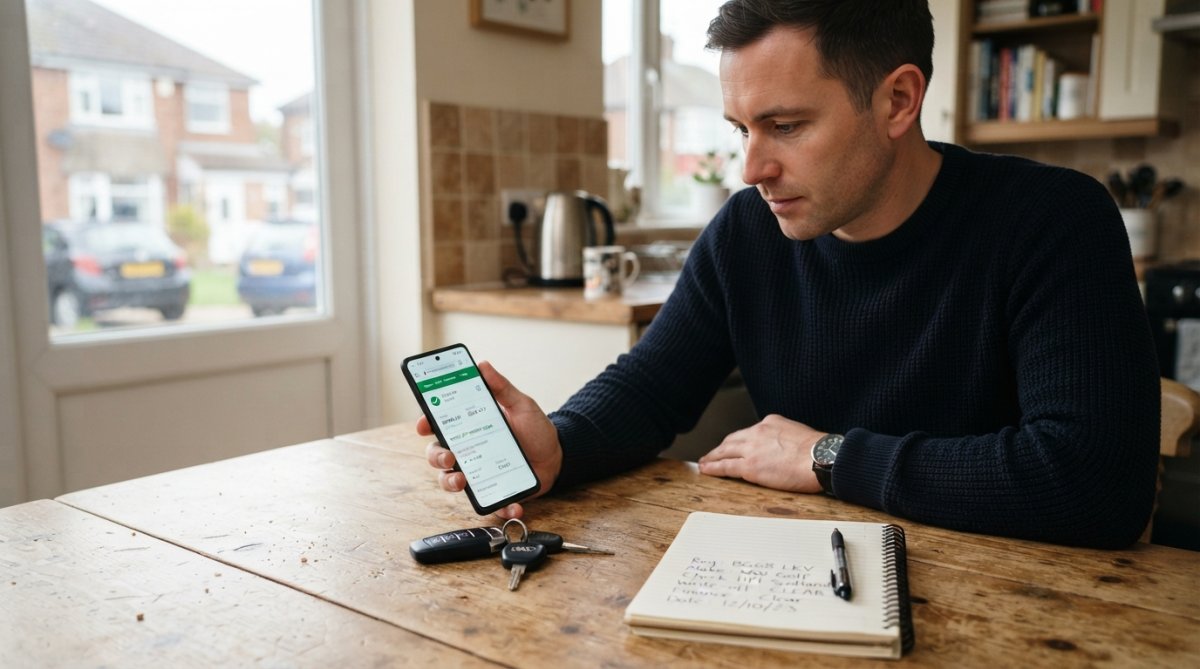
Step 1: Confirm the Registration Number
Check the registration number on the front and rear plates and compare it with the V5C where available.
If the registration on the vehicle, advert and documents does not match, do not assume it is a simple mistake. Ask for an explanation and confirm the vehicle's identity before proceeding.
Step 2: Run a Vehicle History Check Online
Use a vehicle history check that includes insurance write-off information and enter the registration number carefully.
At HPI Check Scotland, reports are delivered online after purchase, allowing you to review the available history before deciding whether to proceed with the vehicle.
Remember that a history report is based on records supplied by relevant data sources. It should be treated as one part of your overall checks rather than a replacement for inspecting the physical vehicle and its documents.
Step 3: Interpret the Write-Off Results
The report should indicate whether a matching insurance write-off marker has been returned and, where available, the recorded category.
If no matching write-off marker is returned, that means none was found in the relevant data checked at the time of the report. It should not be treated as a guarantee that the vehicle has never suffered damage, because not every incident results in an insurance write-off record.
If a Category S or N marker appears, consider the nature of the previous damage, the quality of the repairs, supporting paperwork, the asking price and whether an independent inspection is appropriate.
How to Check Outstanding Finance on a Car
Write-off history is only one part of a used vehicle's background. Outstanding finance is another important issue to investigate.
A vehicle history check can show whether a finance agreement is recorded against the vehicle. A finance marker may mean a lender or finance provider still has an interest in the vehicle.
The legal position can depend on the type of finance agreement and the circumstances of the sale, so it is better not to make assumptions about ownership from the marker alone. If outstanding finance is shown, ask the seller for settlement evidence and independently confirm that the agreement has been cleared before paying for the vehicle.
For more detail, see our guide to checking outstanding finance on a car.
Common Mistakes to Avoid When Checking History
One common mistake is assuming that a free vehicle preview or basic information lookup includes a complete vehicle history. Free services often focus on details such as MOT, tax or basic vehicle information, so always check exactly what is included before relying on the result.
Another mistake is checking the wrong registration number. Always compare the VRM with the vehicle and its documents where possible.
Buyers can also become overconfident because a car is being sold by a dealer or looks excellent in photographs. A history check can provide useful independent information, but it should still be combined with document checks and a physical inspection.
Finally, do not assume that Category N means minor cosmetic damage or that Category S automatically means a repaired car remains unsafe. The category describes the type of damage recorded when the vehicle was written off; it does not by itself prove the present condition or quality of later repairs.
What to Do If a Car Has a Write-Off Marker
A write-off marker does not always mean you should walk away, but it should change the questions you ask.
If the vehicle is recorded as Category A or B and is being offered for normal road use, do not proceed. Those categories must not return to the road.
For a Category S or N vehicle:
- Ask for repair invoices, photographs and other evidence showing what work was carried out.
- Consider an independent inspection by a suitably qualified professional.
- Compare the asking price with similar vehicles that do not have a recorded write-off history.
- Speak to your insurer before buying to confirm that they will cover the vehicle and answer any questions they ask accurately.
- Make sure you are comfortable with the history, condition and future resale implications before committing.
A properly repaired Category S or N vehicle may still be suitable for some buyers, but the decision should be based on evidence rather than appearance alone.
Final Checklist Before You Buy
Before committing to a used car purchase:
- Confirm the registration number matches the vehicle and V5C.
- Run a vehicle history check that includes the information you need.
- Review any recorded insurance write-off category.
- Check for recorded outstanding finance.
- Verify the mileage history and look for inconsistencies.
- Check whether a stolen vehicle marker is returned.
- Review the MOT history for recurring failures, advisories or mileage anomalies.
- Examine repair evidence where a Category S or N marker exists.
- Arrange an independent inspection when the vehicle's history or condition warrants it.
A vehicle history check is a relatively small part of the overall cost of buying a used car, but it can reveal information that deserves further investigation before money changes hands.
For a clear view of the available vehicle background information, vehicle history checks from HPI Check Scotland bring key records together in one report. Customers can also create a free account to keep purchased reports available for future reference.
Conclusion
Buying a used car means making a decision based on the information available at the time. A previous insurance write-off is exactly the kind of history that may not be obvious from the vehicle's current appearance.
Checking the registration before purchase can help uncover a recorded write-off category, finance information, mileage concerns and other warning signs. Use the report alongside your own inspection, document checks and appropriate professional advice so that you can make a better-informed decision before committing to the vehicle.
Frequently Asked Questions
What are the different insurance write-off categories in the UK?
The current UK insurance write-off categories are A, B, S and N. Category A vehicles must be destroyed completely. Category B vehicles must have their body shell destroyed, although some safe parts may be reused. Category S records structural damage, while Category N records damage that is not classed as structural.
Category S and N vehicles may return to the road after appropriate repair, but the category does not certify the quality of the repair. The current A, B, S and N system replaced the previous write-off categories in October 2017.
Can I check if a car has been written off for free?
Free services can provide useful vehicle information, but you should check exactly what each service includes. A free MOT or vehicle-information lookup does not necessarily provide a complete insurance write-off history.
HPI Check Scotland provides a free vehicle preview of key vehicle details before purchase. To investigate recorded write-off history and other vehicle-history risks, choose a report that includes those checks.
How do I find out if a car has outstanding finance?
Run a vehicle history check that includes finance information. If an active finance agreement or finance marker is returned, do not rely solely on the seller's explanation.
Ask for settlement evidence and independently confirm that the finance has been cleared before paying for the vehicle. The legal position can vary depending on the finance agreement and the circumstances of the sale, so unresolved finance should always be investigated.
Does a write-off history affect car insurance premiums?
It can. Some insurers may charge more, apply different terms or decline to insure a previously written-off vehicle.
Before buying a Category S or N vehicle, ask your insurer whether they will cover the exact vehicle and answer their questions accurately. Do not assume that every insurer treats previously written-off vehicles in the same way.