
Table of Contents
- What Makes a Used Car Hold Its Value
- Are Second Hand Car Prices Falling in the UK
- Best Used Car Models for Value Retention
- How to Check Vehicle History Before Buying
- Key Factors That Damage Resale Value
- Making Your Decision: Value Retention and Ownership Costs
- Conclusion
Last Updated: August 31, 2026
What Makes a Used Car Hold Its Value
A used car that holds its value well maintains a higher proportion of its original purchase price over time. This depends on reliability, market demand, service history, condition, mileage, and brand reputation. Understanding what drives value retention is essential before committing to any used car purchase.
The relationship between purchase price and resale value determines your actual cost of ownership. A car purchased for £15,000 but reselling for £10,000 three years later has cost you £5,000 in depreciation. This is why focusing on used cars for value retention matters so much to buyers thinking beyond the immediate transaction.
Brand reputation can influence used-car demand, but no manufacturer or badge guarantees strong resale value. Toyota, Honda, BMW and Audi all have models with active used markets, while electric and hybrid vehicles are taking a growing share of second-hand transactions. The value of an individual car still depends heavily on its model, age, specification, condition, mileage, service history and the market at the time it is sold.
Pro Tip
Check a vehicle's recorded history before making an offer. Outstanding finance, recorded insurance write-off history, and mileage discrepancies can all affect resale value. A comprehensive vehicle history check can identify recorded information that may need further investigation alongside document checks and a physical inspection.
Are Second Hand Car Prices Falling in the UK
Used-car prices do not move uniformly across every age, fuel type and model. Current UK data shows a resilient but mixed market rather than a simple nationwide rise or fall.
The Society of Motor Manufacturers and Traders reported that 2,009,318 used cars changed hands in Q2 2026, up 0.7% year on year. Used battery-electric transactions rose 67.0% to 110,761 vehicles and reached a 5.5% share of the used market.
Auto Trader's July 2026 Retail Price Index reported overall like-for-like used asking prices 0.8% higher year on year, while used-EV asking prices were 3.3% higher. These are market-wide measures rather than guarantees about the future value of any individual vehicle.
Economic factors such as interest rates, fuel costs, insurance costs, vehicle supply and consumer demand can all influence second-hand car prices. When comparing cars for value retention, look at current prices for the particular model, age, mileage and specification rather than relying on a brand-wide rule.
Best Used Car Models for Value Retention
 The vehicles that retain value best share common characteristics: proven reliability, strong demand in the second-hand market, reasonable running costs, and a loyal owner base.
Japanese Brands: Toyota and Honda
Toyota Yaris, Corolla and Prius models and Honda Jazz and Civic models are examples that UK used-car buyers may encounter in large numbers. They can be sensible cars to compare when looking at value retention, but a badge alone does not establish how well a particular example will hold its value.
Compare asking prices for cars of the same generation, trim, engine, age and mileage. Condition, documented servicing, specification and local demand can create substantial differences between two otherwise similar vehicles.
Key Takeaway
Treat brand reputation as one factor, not a resale-value guarantee. Compare like-for-like examples in the current used market before deciding which car offers the strongest value.
Premium Brands: BMW and Audi
Premium models such as the BMW 3 Series and Audi A3 or A4 can remain desirable in the used market, but the original purchase price or premium badge does not guarantee stronger percentage value retention.
Running costs also matter. Servicing, tyres, insurance, replacement parts and repairs can be more expensive on some premium vehicles, so a higher future sale price does not necessarily mean a lower overall cost of ownership.
When comparing a premium car with a mainstream alternative, consider both likely resale demand and the costs you expect to incur while owning it.
Electric and Hybrid Vehicles
Electric and hybrid values are changing quickly, which makes broad predictions about individual models risky.
The SMMT reported that used battery-electric vehicle transactions increased 67.0% year on year in Q2 2026, while Auto Trader reported used-EV like-for-like asking prices 3.3% higher year on year in July 2026.
That shows a growing used-EV market, but it does not mean every EV will retain value equally. Battery condition, usable range, charging capability, age, specification, manufacturer support and the supply of newer competing models can all affect demand.
Hybrid vehicles also vary substantially by model and age. Compare current market prices and inspect the individual vehicle rather than assuming that hybrid, electric or petrol power automatically produces better resale value.
How to Check Vehicle History Before Buying
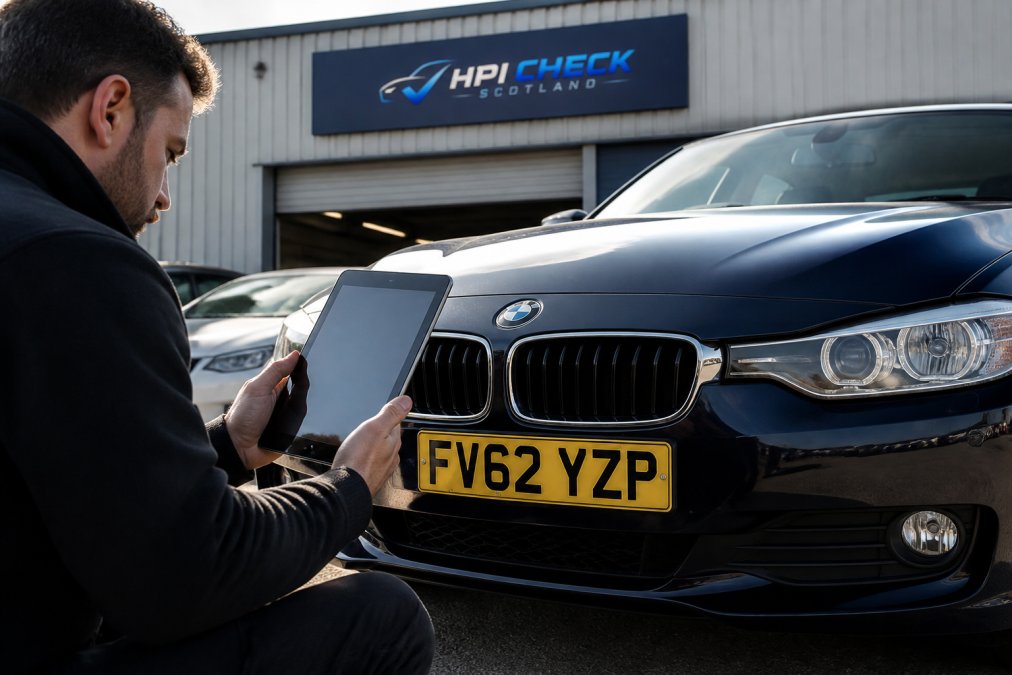 Before committing to a used-car purchase, check the vehicle's recorded history and compare it with the car and its documents. A suitable history check can help identify outstanding finance, recorded insurance write-off history, stolen-vehicle information, mileage inconsistencies and other information that may require further investigation.
The free DVLA Vehicle Enquiry Service provides information including vehicle-tax and SORN status, MOT expiry and basic vehicle details. Detailed previous MOT results and recorded test mileage are available through the separate GOV.UK MOT history service. These official services do not provide an outstanding-finance check or a commercial insurance write-off history check.
A commercial vehicle-history report can add information beyond the free government services. The HPI Check Scotland Full Vehicle History Check can include outstanding-finance information alongside recorded insurance write-off history, stolen-vehicle information and mileage history, depending on the data returned for the vehicle.
When reviewing mileage history, pay attention to the progression of recorded readings. A later reading that is lower than an earlier one is an inconsistency that should be investigated, but it does not by itself prove odometer tampering. Recording errors, unit differences and other data issues can also produce apparent discrepancies. Keeper changes can also provide useful context, but their number alone does not prove that a vehicle has a problem.
Outstanding finance is an important issue to investigate before purchase. Under hire-purchase or conditional-sale arrangements, the person using the vehicle may not yet have legal title to sell it without the lender's permission. The position for an innocent private purchaser can be more nuanced: Citizens Advice Scotland explains that a qualifying private buyer may have good title where the relevant conditions are met. Treat a finance marker as a reason to investigate and verify the position before paying for the vehicle.
Insurance write-off history can affect resale value and should be understood before purchase. Under current GOV.UK write-off categories, Category A vehicles must be crushed and Category B body shells must be crushed; neither category can return to the road. Category S and N vehicles can return to use if repaired to a roadworthy condition. Older records may still contain the pre-October-2017 Category C and D classifications.
Watch Out
A vehicle-history check is a useful part of used-car due diligence, but it should be combined with document checks and a physical inspection. If a seller is unwilling to provide the registration, VIN or other information reasonably needed to verify the vehicle, investigate further before proceeding.
Key Factors That Damage Resale Value
Understanding what erodes used car value helps you make better purchasing decisions and avoid vehicles likely to depreciate further.
Recorded insurance write-off history can affect resale demand and value, but the effect varies with the vehicle, category, age, quality of repair and market. Not every accident results in an insurance write-off marker, and a database report cannot assess the physical quality of a repair, so inspect the vehicle separately.
Mileage is an important pricing factor, but its effect varies by model, age, condition and maintenance. All else being equal, a higher-mileage example may attract a lower price than a comparable lower-mileage car, although a well-maintained higher-mileage vehicle can still be preferable to a neglected lower-mileage example.
Service-history gaps can reduce buyer confidence, but missing paperwork does not automatically prove that maintenance was neglected. Ask for invoices, digital service records and other evidence where available. A well-documented maintenance history can make a vehicle easier for a later buyer to assess.
Recorded outstanding finance can complicate a sale and should be resolved or satisfactorily explained before purchase. The ownership position depends on the type of agreement and the circumstances, including the statutory protections that may apply to a qualifying private purchaser.
Colour can influence demand, but the effect varies by model, age and current buyer preferences. Treat colour as a secondary market factor rather than assuming particular shades will always retain more value.
Recorded write-off history can influence resale demand even after a repair. The effect on price varies, so compare the vehicle with similar examples and make sure any repairable write-off has been restored to a roadworthy condition.
Modifications, particularly extensive or non-standard changes, can damage value. Buyers prefer standard factory specifications. Custom exhausts, lowered suspension, or non-original interiors appeal to a smaller market segment and typically reduce overall value.
Making Your Decision: Value Retention and Ownership Costs
Selecting a used car for value retention requires balancing several competing priorities. The cheapest car isn't necessarily the best investment if it depreciates rapidly. A more expensive, reliable model might cost less overall when you factor in lower repair bills, better fuel economy, and higher resale value.
Consider your ownership timeline. If you plan to keep the car for ten years, value retention matters less than reliability and running costs. If you'll sell within three years, choosing a model known for holding value becomes critical.
Running costs form part of the ownership calculation alongside depreciation. Fuel or electricity use, insurance, servicing, tyres, tax and repairs can vary substantially between models, so compare likely costs for the specific vehicles on your shortlist rather than relying on broad brand assumptions.
The mileage you add during ownership can affect future resale value, particularly when buyers compare otherwise similar cars. If you expect to cover high annual mileage, factor both the likely odometer reading at resale and the vehicle's maintenance requirements into your decision.
Before finalising a purchase, use an appropriate vehicle history check alongside the V5C, VIN, MOT history and a physical inspection. A history report can identify recorded information that needs investigation, but it is a snapshot of the data returned at the time of the check rather than a guarantee about every event in the vehicle's past.
| Factor | Why It Matters | Best Approach |
|---|---|---|
| Model demand | Buyer demand influences resale | Compare like-for-like current listings |
| Mileage | Higher mileage can affect demand and price | Check mileage history and expected future use |
| Service history | Documentation can support buyer confidence | Verify available maintenance records |
| Condition | Physical condition affects desirability | Inspect the vehicle carefully |
| Outstanding finance | Can create ownership complications | Check and verify the position before purchase |
| Write-off history | Recorded total-loss history can affect demand | Understand S/N and older C/D records |
| Age and specification | Different versions can depreciate differently | Compare the same generation and trim |
| Running costs | Affect overall ownership cost | Compare insurance, fuel, servicing and repairs |
| Modifications | Can narrow the future buyer market | Assess quality, legality and buyer appeal |
Conclusion
Selecting a used car for value retention is not simply about choosing the cheapest option, newest model or a particular badge. Resale value depends on the individual model and specification, market demand, mileage, condition, service history, running costs and wider market conditions. The rapid growth of the used-EV market in 2026 is also a reminder that demand can change quickly, so current like-for-like pricing matters more than fixed assumptions about which type of car will always depreciate least.
Before committing to a purchase, check the vehicle's recorded history and investigate anything that does not make sense. A suitable report can help identify outstanding-finance information, recorded insurance write-off history, stolen-vehicle information and mileage history. Combine that information with official records and a physical inspection, then consider both likely depreciation and the total cost of ownership.
Frequently Asked Questions
Which car brands have the best resale value in the UK?
There is no single brand that is guaranteed to retain value best across every model and age. Toyota and Honda models are commonly considered by used-car buyers, while premium brands such as BMW and Audi also have strong used markets, but actual resale performance varies by model, specification, mileage, condition and demand. Compare like-for-like examples in the current market rather than relying on the badge alone.
How does a vehicle history check affect a used car's resale value?
A clear vehicle-history report can support buyer confidence, while recorded finance, write-off history or mileage inconsistencies may require investigation and can affect how a later buyer views the car. A report is a snapshot of information returned at the time of the check, so it should be used alongside the vehicle's documents and physical condition.
Do hybrid and electric cars hold their value better than petrol cars?
There is no universal rule. In 2026 the UK used-EV market has been growing strongly, with SMMT reporting a 67.0% year-on-year rise in used battery-electric transactions in Q2. Individual resale values still vary by model, age, battery condition, range, specification, supply and demand. Battery condition should be assessed separately because a vehicle-history database report does not measure battery health.
What should I look for in a vehicle history check before buying?
Check the information appropriate to the report type. A Full HPI Check Scotland report can include outstanding-finance information, while vehicle-history data may also include recorded insurance write-off history, stolen-vehicle information and mileage history. Compare the VRM and VIN with the physical vehicle and V5C, check official MOT records, and investigate any discrepancy before buying. Outstanding finance does not simply become the buyer's personal debt; ownership rights can depend on the finance agreement and the circumstances of the purchase.
Better decisions start with better information. Use the free DVLA and MOT services for official vehicle information, then use an appropriate commercial history check for additional recorded data such as finance or insurance write-off information where required. Compare those records with the vehicle itself before you buy.