
Table of Contents
- What Is Happening to Second Hand Car Prices Right Now?
- Why Second Hand Car Prices Surged, and What Changed Afterwards
- How Are Different Types of Used Car Moving in Price?
- The Best Time to Buy a Used Car in the Current Market
- How to Check Used Car Value Before You Make an Offer
- Why Vehicle History Check Importance Should Not Be Overlooked in a Falling Market
- Conclusion
Last Updated: August 29, 2026
What Is Happening to Second Hand Car Prices Right Now?
Second hand car prices across the UK are no longer moving in one simple direction. After the sharp post-pandemic rise and subsequent correction, the market in 2026 is better described as resilient and mixed: some segments remain cheaper than their peaks, while others are stable or rising. Buyers therefore need to look at the specific age, model and fuel type rather than assume that used car prices are falling across the board.
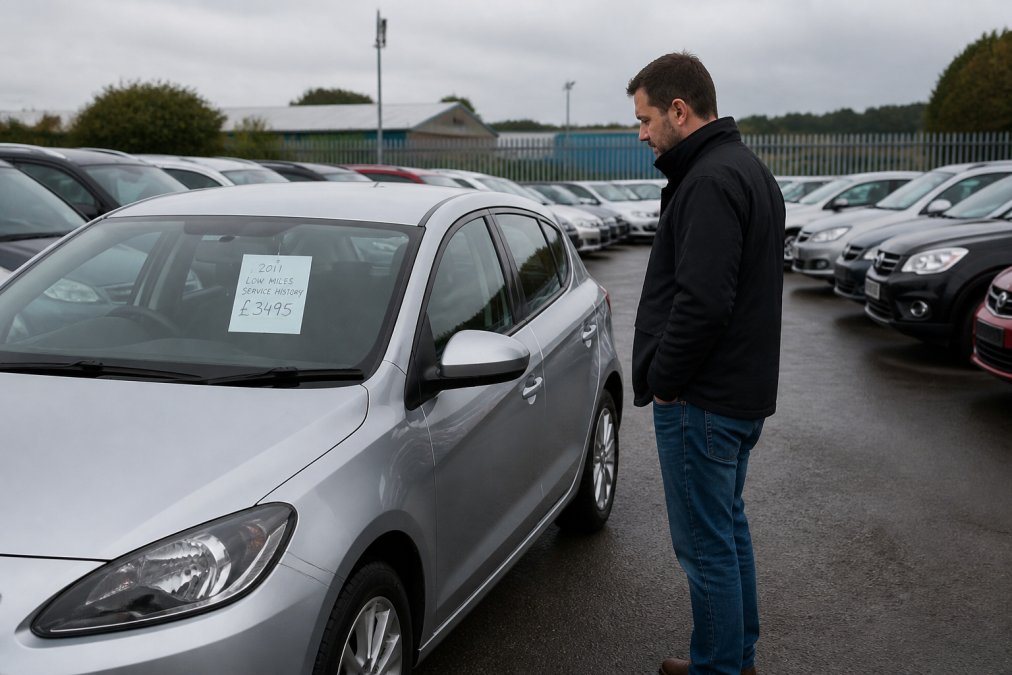 At HPI Check Scotland, we track how market conditions affect buying decisions, and one thing stands out clearly: falling prices do not automatically mean lower vehicle-history risk. A cheaper car can still have recorded finance, write-off, theft or mileage issues, so price should not replace normal pre-purchase checks.
The current picture is nuanced. SMMT used car data shows that 2,009,318 used vehicles changed hands in the UK during Q2 2026, up 0.7% year on year, while the first half of 2026 was up 0.2% at 4,025,550 transactions. SMMT measures vehicle transactions rather than average retail prices. Auto Trader's July 2026 Retail Price Index separately reported like-for-like used car asking prices up 0.8% year on year, with the average used car advertised at £17,106. Taken together, the figures point to a resilient but uneven market rather than an across-the-board fall in prices.
For buyers, the useful lesson is not that every seller suddenly has less negotiating power. It is that current market evidence should be checked for the specific vehicle being considered rather than relying on a broad headline about rising or falling prices.
| Current 2026 Signal | What It Means for Buyers |
|---|---|
| Q2 used vehicle transactions up 0.7% year on year | The overall used market remains active and resilient |
| July like-for-like used asking prices up 0.8% year on year | Do not assume the whole market is falling |
| July used EV asking prices up 3.3% year on year | EV values are no longer simply moving downward |
| Bank Rate held at 3.75% in July | Finance cost remains important when comparing affordability |
Why Second Hand Car Prices Surged, and What Changed Afterwards
The surge in second hand car prices was not accidental. It was the predictable result of two forces colliding at the worst possible moment.
The Supply Squeeze That Pushed Prices Up
The global semiconductor shortage, which began disrupting manufacturing supply chains from around 2020 onwards, starved new car production lines of the components they needed. Factories cut output. Waiting lists for new vehicles stretched to a year or more. Buyers who could not wait turned to the used market instead, and demand surged precisely when supply was constrained.
The result was a used car market that behaved unlike anything seen in living memory. Vehicles that would ordinarily depreciate were appreciating. Older cars with high mileage were selling for prices that would have seemed absurd a few years earlier. Dealers reported buying stock at auction for more than they had sold similar vehicles for previously.
The severe supply squeeze that characterised the pandemic period has eased as new vehicle production recovered from its worst disruption, according to manufacturing data from the SMMT. That removed one of the forces that had pushed used values sharply higher, but today's prices still depend on the balance of supply and demand for each particular age, model, specification and fuel type.
How Inflation and Interest Rates Changed Buyer Behaviour
The second force is equally important. As the Bank of England raised interest rates to combat inflation, the cost of borrowing rose sharply. Finance deals that once looked affordable became significantly more expensive month by month. Many buyers who had planned to purchase on finance found their monthly payments had jumped beyond what they were willing to commit to.
Higher borrowing costs have also affected affordability for buyers using finance. At its July 2026 meeting, the Bank of England's Monetary Policy Committee voted by 6–3 to keep Bank Rate at 3.75%, with three members preferring an increase to 4%. That makes it safer to say that finance costs remain an important part of the buying decision, rather than assume interest rates or used car prices are moving in one predictable direction.
The practical implication is that market conditions vary considerably by vehicle and by how the purchase is financed. Buyers should compare current examples of the specific car they want rather than rely on a prediction that the whole used market will continue falling.
Pro Tip
If you are financing a used car purchase, get a finance agreement in principle before you start viewing vehicles. Knowing your actual monthly payment before you fall in love with a specific car prevents the kind of emotional decision-making that leads to overstretching.
How Are Different Types of Used Car Moving in Price?
Not all segments of the used car market are correcting at the same pace. The pattern of which types are falling fastest tells you a great deal about where the best value currently sits.
Electric vehicles experienced some of the steepest price corrections after their 2022 and 2023 peaks, but the latest 2026 evidence shows that trend is no longer simply downward. Auto Trader reported used EV like-for-like asking prices up 3.3% year on year in July 2026 to an average £24,946, while used EV demand on its marketplace was up 13.9%. SMMT also reported battery-electric used car transactions up 67.0% in Q2 2026. Used EVs can still represent much better value than at their earlier peaks, but buyers should compare current examples rather than assume EV prices are continuing to fall rapidly.
Different parts of the used car market can behave very differently depending on supply, running costs and buyer demand. Larger vehicles, diesel models, hybrids and electric vehicles should therefore be compared within their own age, mileage and specification group rather than treated as one market.
There is no dependable one-size-fits-all list of the vehicles that will hold their value best. Condition, mileage, specification, service history, supply and current buyer demand can all materially affect the price of an individual car.
If you are flexible about what you drive, compare several suitable models and segments rather than assuming the cheapest or most popular category automatically represents the best value. Purchase price is only one part of the decision; condition, history and ongoing running costs matter too.
Watch Out
Falling prices in a specific segment can sometimes signal a problem beyond simple market correction. If a particular model is consistently cheaper than comparable alternatives, investigate why. Reliability issues, high running costs, or widespread finance problems in that model range can all suppress prices for reasons that will affect you as the next owner.
The Best Time to Buy a Used Car in the Current Market
There is no single best time to buy a used car across the whole UK market. The better approach is to buy when you have found the right vehicle at a price you have checked against comparable listings, with finance and running costs you can comfortably afford.
Current conditions vary significantly by segment. Some vehicles remain well below earlier peaks, while others are stable or rising. Rather than trying to time the entire market, compare several current examples of the specific model you want and negotiate from that evidence.
The smarter approach is to use the current conditions to your advantage without rushing the individual purchase decision. Specifically:
- Set a realistic budget that includes insurance, tax, servicing, and the cost of a vehicle history check. The purchase price is only part of the total cost.
- Compare enough current listings to understand the market. Look at vehicles with similar age, mileage, specification and condition before deciding what represents fair value.
- Negotiate from evidence. If comparable vehicles are genuinely cheaper, use those examples when discussing the asking price rather than assuming every seller should automatically accept a lower offer.
- Do not let pressure replace due diligence. If you feel rushed, make sure you have still checked the vehicle, its history and the full cost of the purchase before committing.
Seasonal pricing patterns can vary by model, region, supply and buyer demand. Rather than rely on a rule about January, February or any other month, compare current listings for similar vehicles when you are ready to buy.
How to Check Used Car Value Before You Make an Offer
Knowing how to check used car value accurately is one of the most practical skills you can develop as a buyer. Going into a negotiation without checking comparable prices can make it harder to judge whether an asking price is reasonable.
The process is straightforward. Start with free valuation tools from established automotive publications and price guide services to get a baseline for what similar vehicles are selling for. These tools typically ask for the registration, mileage, and condition, and they return a range covering private sale, part-exchange, and dealer retail values. Understanding the difference between those three figures is important: a dealer retail price includes the dealer's margin and warranty contribution, while a private sale price reflects what a private individual might realistically achieve.
Then cross-reference against actual listings. Search for the same make, model, year, and approximate mileage across the major used car platforms. If the car you are looking at is priced above comparable listings, you have a clear basis for negotiating down. If it is priced in line with or below the market, you are already looking at fair value.
A common mistake is valuing the car in isolation from its condition and history. Service-history documents and maintenance records should be checked separately because they are not the same thing as vehicle-history-report data. A vehicle history report can add recorded information such as finance, write-off and mileage history where available, while service records, invoices and the physical condition of the car still need to be assessed in their own right.
Key Takeaway
Valuation tools tell you what a car should cost. A vehicle history check tells you what the car actually is. You need both before making an offer.
Why a Vehicle History Check Still Matters
A softer used-car market does not reduce the importance of checking the individual vehicle.
A lower asking price can look attractive, but price alone does not show whether finance, write-off, stolen-vehicle or mileage issues are recorded. The same due diligence is useful whether the wider market is rising, falling or broadly stable.
 Whatever the wider market is doing, a competitive asking price does not reduce the importance of checking a vehicle's history. A car with outstanding finance, a write-off marker, or a mileage discrepancy can still carry significant risk even when its asking price looks reasonable compared with similar vehicles.
Outstanding finance is an important issue to check before buying because a person using hire purchase or conditional-sale finance may not yet own the vehicle outright or have the unrestricted right to sell it. The position after a sale is more nuanced than simply saying the finance always follows the car. Under the Hire-Purchase Act 1964, a qualifying private purchaser of a motor vehicle who buys in good faith and without notice of an existing hire-purchase or conditional-sale agreement may obtain good title. Citizens Advice Scotland similarly explains that private buyers often have the right to keep the car where the relevant conditions are met. The outcome depends on the circumstances, which is why checking for outstanding finance before paying for a vehicle remains so important.
HPI Check Scotland provides vehicle history reports that cover exactly these risks. A Full report checks for outstanding finance, insurance write-off history, stolen vehicle status, mileage discrepancies, MOT history, and tax status, alongside full vehicle specifications. Reports are available instantly online, results are delivered immediately, and previous reports are saved securely in your account so you can refer back to them.
For motor trade professionals buying multiple vehicles, discounted bundle options can make it practical to check vehicles consistently rather than relying only on first impressions.
A checklist of what a thorough vehicle history check should cover:
- Outstanding finance check against the vehicle's registration
- Insurance write-off category check (Category A, B, S, or N)
- Stolen vehicle status check
- Mileage history and consistency check
- MOT history including advisories and failures
- Vehicle tax status
- Number of previous keepers
- Full vehicle specification confirmation
Do not skip this step simply because the asking price looks reasonable. A sensible-looking price does not tell you whether the vehicle's recorded history is clean.
Conclusion
The UK used car market in 2026 is mixed rather than moving uniformly downward. Some vehicles remain cheaper than at their post-pandemic peaks, while others are stable or rising, so buyers should judge the specific car rather than rely on a market headline. But a lower price tag does not make a car a good purchase if its history is unclear. HPI Check Scotland's vehicle history reports give you the information you need to buy with confidence: outstanding finance checks, write-off history, stolen vehicle status, mileage history, and MOT records, all in one place, delivered instantly. Create a free account with HPI Check Scotland and check any UK-registered vehicle before you commit.
Frequently Asked Questions
Are used car prices expected to drop further in 2026?
There is no clear evidence that every part of the UK used car market will keep falling. SMMT recorded Q2 2026 transactions up 0.7% year on year, while Auto Trader reported overall like-for-like asking prices up 0.8% year on year in July. Individual models and fuel types can move very differently, so buyers should compare the specific vehicle they are considering.
Is it a good time to buy a used car right now?
It can be a good time to buy if you have researched the particular car and can afford the full cost of ownership, but there is no single market-wide answer. Compare similar current listings, avoid being rushed into a purchase, check the vehicle's history and consider the cost of finance, insurance, tax and maintenance.
How do I check if a used car is priced fairly?
Compare the asking price with current listings for the same make, model, age, specification and similar mileage. Then take condition, service history and MOT history into account. A vehicle history check adds information that a price comparison cannot, including recorded finance, write-off and mileage-history information where available.
What factors influence used car depreciation in the current market?
Age, mileage, condition, specification, fuel type, supply and buyer demand can all affect depreciation. Trends also change over time: for example, Auto Trader reported used EV asking prices up 3.3% year on year in July 2026 after the much sharper EV price falls seen in earlier years. Compare the specific vehicle with the current market rather than relying on a general rule about petrol, diesel, hybrid or electric cars.