
Table of Contents
- What's Included in an Instant Car History Report
- How to Check Outstanding Finance on a Car
- Vehicle Insurance Write-Off Check Explained
- Step-by-Step: Getting Your Report in Minutes
- Building a Used Car Buying Checklist
- Common Mistakes to Avoid When Checking Vehicle History
- Why Instant Reports Matter Before Purchase
- Conclusion
Last Updated: September 4, 2026
What's Included in an Instant Car History Report
An instant car history report brings together useful recorded information about a vehicle's past in one place. Depending on the report purchased, this may include vehicle identity details, MOT and road tax information, mileage records, outstanding finance indicators, insurance write-off or salvage history, stolen vehicle information, keeper and registration-plate history, specifications and other vehicle-history data.
HPI Check Scotland lets you check key vehicle details first and then choose between the available Basic and Full report options. The exact information included depends on the report selected. The Full report is designed to provide a broader vehicle-history check and includes finance, stolen, write-off, mileage, keeper, plate and salvage history where available. Buyers should review the checks listed for the selected report before payment rather than assume every report contains the same data.
These reports are useful because they bring information from vehicle-registration and third-party data sources into a clear, searchable format. They should be treated as an important part of due diligence rather than as a guarantee that a vehicle is problem-free. Buyers should still compare the report with the vehicle itself, the V5C, service history, seller information and an appropriate physical or mechanical inspection.
You do not need to create an account to purchase a report. HPI Check Scotland offers guest checkout, allowing customers to enter a registration, choose a report and complete payment without registering. Once the report has been generated, an email is sent with a link giving the customer online access to the report. Creating a free account is optional and provides a convenient way to keep purchased reports together for future access.
How to Check Outstanding Finance on a Car
Outstanding finance is one of the most important checks to make before purchasing a used vehicle. A finance record may indicate that the vehicle is subject to an agreement under which a finance company still has an interest in it. The precise legal position depends on the type of finance agreement and the circumstances of the sale, so an outstanding-finance result should be investigated before money changes hands.
The position is not as simple as saying that every buyer of a vehicle with outstanding finance will automatically lose the car. For example, a private buyer who purchases a vehicle in good faith without knowing that it is subject to certain hire-purchase or conditional-sale agreements can have legal protection in some circumstances (Citizens Advice Scotland). This is one reason to treat a finance warning as a matter that needs clarification rather than making assumptions about ownership or repossession.
A vehicle history check can search relevant vehicle-history data for a finance record linked to the registration. When reviewing an instant car history report, look carefully at the finance result. If finance is recorded, ask the seller for evidence showing how and when it will be settled and do not complete the purchase until you are satisfied that the position has been resolved. If necessary, seek advice before proceeding.
A "no finance recorded" result is reassuring, but it should be understood as the result returned by the data sources checked rather than a legal guarantee about every possible agreement. For traders and independent garages, checking finance before taking a part-exchange or purchasing stock is a sensible routine safeguard.
Vehicle Insurance Write-Off Check Explained
A vehicle insurance write-off check can reveal whether an insurer has previously recorded the vehicle as a total loss. A write-off occurs when an insurer decides to settle a claim based on the vehicle's value rather than paying for the repair. The category matters because it describes the type of damage and whether the vehicle can legally return to the road.
The current UK write-off categories are (gov.uk):
- Category A: cannot be repaired and the entire vehicle must be crushed.
- Category B: cannot be repaired for return to the road; the body shell must be crushed, although usable parts can be salvaged.
- Category N: non-structural damage. The vehicle can be used again if it is repaired to a roadworthy condition.
- Category S: structural damage. The vehicle can be used again if it is repaired to a roadworthy condition.
An instant car history report can flag recorded write-off history and, where the data is available, identify the category. This matters because previous write-off history can affect a vehicle's market value, resale prospects and the terms on which an insurer is willing to cover it.
A Category N or S record does not automatically mean a vehicle is unsafe today, but the category alone does not prove the quality of any repairs either. Buyers should consider the write-off history alongside repair evidence and, where appropriate, an independent inspection. For traders, recording and understanding write-off history also helps with stock assessment, pricing and clear disclosure to customers.
Step-by-Step: Getting Your Report in Minutes
Obtaining an instant car history report is a straightforward process designed to take just a few minutes from start to finish.

Step 1: Enter the Registration Number
Start on the HPI Check Scotland home page and enter the vehicle's registration number, also called the VRM or number plate. The registration number is the alphanumeric code displayed on the front and rear of the vehicle, for example AB26 XYZ (gov.uk).
Double-check the registration before proceeding. Entering the wrong registration can return information for a different vehicle or prevent a valid vehicle from being found. The registration number is enough to begin the initial vehicle lookup and free preview.
Step 2: Choose Your Report Type
After the vehicle has been found, review the free vehicle preview and choose the report option that suits the check you want to carry out. HPI Check Scotland offers Basic and Full report options, with the exact checks shown before payment.
The Full report provides the broader history check, including finance, stolen, write-off, mileage, keeper, plate and salvage history where available. Buyers should choose based on the information they need rather than assuming that one report type is automatically right for every vehicle.
Customers who check vehicles regularly can also consider prepaid report bundles, while motor trade users can find dedicated information on the Trade Checks page.
Step 3: Complete Payment
Once the report type is selected, the available payment options are displayed. Customers can complete the purchase using guest checkout, so creating an account is not required.
After successful payment, the report is normally generated immediately. Rare delays can occur if an external data provider is temporarily slow or unavailable, so "instant" should be understood as the normal service rather than a promise that no external delay can ever occur.
Step 4: Access Your Report
Once the report has been generated, it can be viewed online immediately. Customers using guest checkout receive an email containing a link back to the report, so they can access it again later without having created an account.
Creating a free account is optional. Customers who choose to create or use an account can keep purchased reports saved together for convenient future access. The report is designed to present key findings clearly so that the buyer can review each section before deciding what further questions or checks may be needed.
Building a Used Car Buying Checklist
A structured checklist helps buyers stay organised when evaluating a vehicle and reduces the chance of overlooking an important detail. Combining information from an instant car history report with documentation checks and a physical inspection gives a much broader assessment than relying on any one source alone.
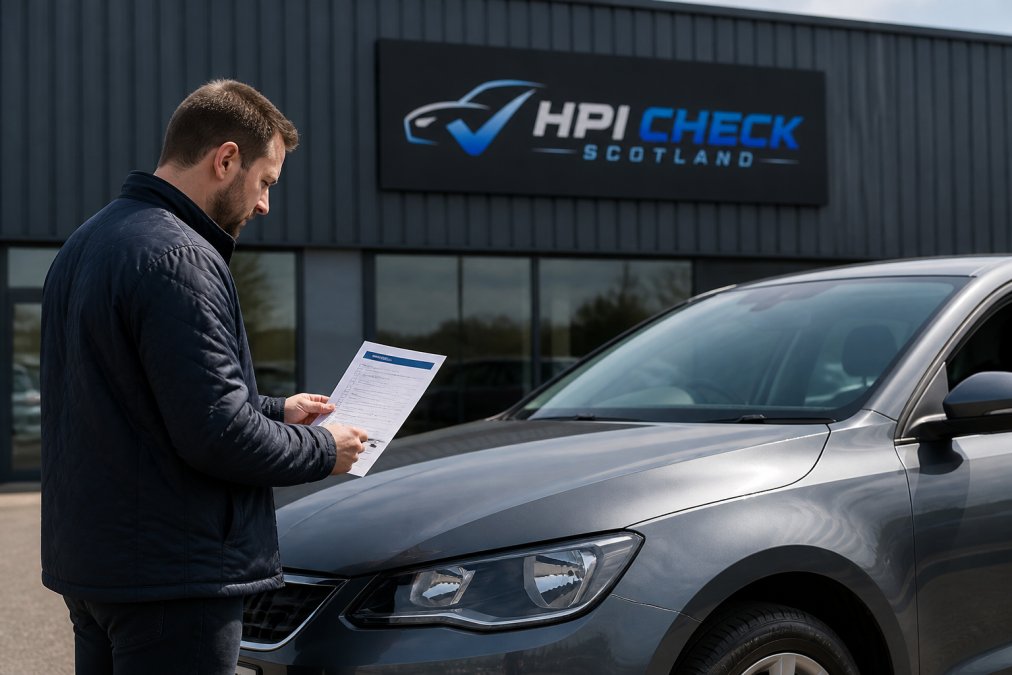 From the report, review the finance result, write-off or salvage history, MOT status and recorded mileage history. Compare those records with the current odometer, V5C and service documentation. During the physical inspection, check the exterior, interior, warning lights, tyres and obvious mechanical condition, and take an appropriate test drive where possible.
A checklist can also identify questions to raise with the seller. If the MOT is due soon, for example, you may want to factor that into the negotiation or ask whether the seller will arrange a new test. If mileage records contain a gap or unusual entry, ask for an explanation and compare it with other documentation rather than assuming the cause.
Traders and garages may add stock-specific checks such as market value, expected reconditioning costs and likely resale margin.
Common Mistakes to Avoid When Checking Vehicle History
Many buyers make preventable mistakes when checking vehicle history, often by relying on one source of information instead of comparing the available evidence.
Relying only on the seller's description is risky. A seller may believe the vehicle has no adverse history, or may simply be repeating information they were given. Independent checks help the buyer compare those claims with recorded data.
Assuming a clean history report means the vehicle is problem-free is another mistake. A report checks specific recorded information; it does not assess the vehicle's current mechanical condition, guarantee its safety, confirm the quality of previous repairs or replace a physical inspection.
Assuming buying from a dealer removes the need for your own checks can also leave gaps. A reputable dealer may already have carried out history checks, but buyers can still verify important information independently before committing to the purchase.
Misinterpreting mileage history is common. A gap in MOT records does not automatically mean odometer tampering, and an unusual increase or reduction can sometimes be caused by an incorrect recorded figure. Mileage entries should be considered in context alongside surrounding MOT records, service history and the current odometer.
Treating every write-off as identical can also lead to poor decisions. Categories A and B cannot return to the road, while Categories N and S can be used again if repaired to a roadworthy condition. A Category N or S vehicle may still deserve careful inspection and should be valued with its recorded history in mind.
Finally, failing to act on information in the report defeats the purpose of carrying out the check. If finance is recorded, clarify it before purchase. If mileage entries conflict, investigate them. If write-off history appears, establish the category and consider repair evidence before deciding whether to proceed.
Why Instant Reports Matter Before Purchase
Buying a used car is a significant financial decision. An instant car history report can reduce uncertainty by giving the buyer access to recorded information that may not be obvious from looking at or test-driving the vehicle.
A car can appear clean and drive well while still having a finance record, previous write-off history, a mileage discrepancy or another recorded issue that deserves further investigation. The purpose of the report is not to declare a vehicle "good" or "bad", but to give the buyer more information before making that decision.
The consequences of missing important history can be significant. Outstanding finance can create a complicated ownership dispute, although the legal rights of a private buyer depend on the circumstances. A previous write-off can affect value, resale and insurance terms. An unexplained mileage discrepancy can affect confidence in the vehicle's history and the price a buyer is willing to pay.
For traders and garages, regular vehicle-history checks are a useful part of stock and part-exchange due diligence. Trade Vehicle History Checks and prepaid options are designed to make repeated checks easier to manage.
Instant access is also useful when a decision has to be made quickly. Instead of waiting for information from several different sources, the buyer can review key recorded history in one place, then decide what needs to be verified with the seller or through further inspection.
The report can also support negotiation. An MOT that is due soon, recorded write-off history or a mileage issue may justify further questions or affect the buyer's valuation, provided the information is considered fairly and in context.
Conclusion
Buying a used car carries risk, but that risk can be reduced through careful due diligence. An instant car history report is a practical way to review recorded information about areas such as finance, write-off history, MOT status and mileage history before committing to a purchase.
HPI Check Scotland brings vehicle-registration and third-party history data into a clear online report. Customers can use guest checkout without creating an account, view the generated report online and use the email link sent after purchase to return to it later. Creating a free account remains optional for customers who want purchased reports saved together.
A vehicle history report should be used alongside the V5C, service history, seller checks, physical inspection and, where appropriate, an independent mechanical inspection. Used that way, it gives private buyers and motor traders a stronger factual basis for deciding whether to proceed with a vehicle.
Frequently Asked Questions
What information is included in an instant car history report?
The information included depends on the report purchased. A vehicle history check may include vehicle identity details, MOT and road tax information, mileage records, finance indicators, insurance write-off or salvage history, stolen vehicle information, keeper and registration-plate history, specifications and other recorded vehicle data. HPI Check Scotland shows the checks included with each report option before payment.
How do I check if a car has outstanding finance?
Choose a vehicle history report that includes a finance check and review the finance result carefully. If finance is recorded, do not assume the legal position or complete the purchase until the agreement has been clarified. Ask the seller for evidence of settlement and seek advice if necessary. In some circumstances a private buyer who purchased in good faith without knowing about certain hire-purchase or conditional-sale finance can have legal protection, so an outstanding-finance result should be investigated rather than treated as an automatic repossession outcome.
What does an insurance write-off category mean for a used car?
UK insurance write-off categories are A, B, N and S. Category A vehicles must be crushed completely. Category B vehicles cannot be repaired for return to the road and the body shell must be crushed, although usable parts may be salvaged. Category N records non-structural damage and Category S records structural damage; N and S vehicles can return to use if repaired to a roadworthy condition. A history report can show recorded write-off information, but buyers should also consider repair evidence and the vehicle's current condition.
Can I get a free car history report in the UK?
Some vehicle information is available free of charge through GOV.UK, including MOT history and road tax information. More comprehensive history checks covering areas such as finance, write-off history and other third-party vehicle data are normally paid services. HPI Check Scotland also provides a free vehicle preview before customers choose a Basic or Full report.